Built Work · Infrastructure · Knysna
Counterweight Bridge
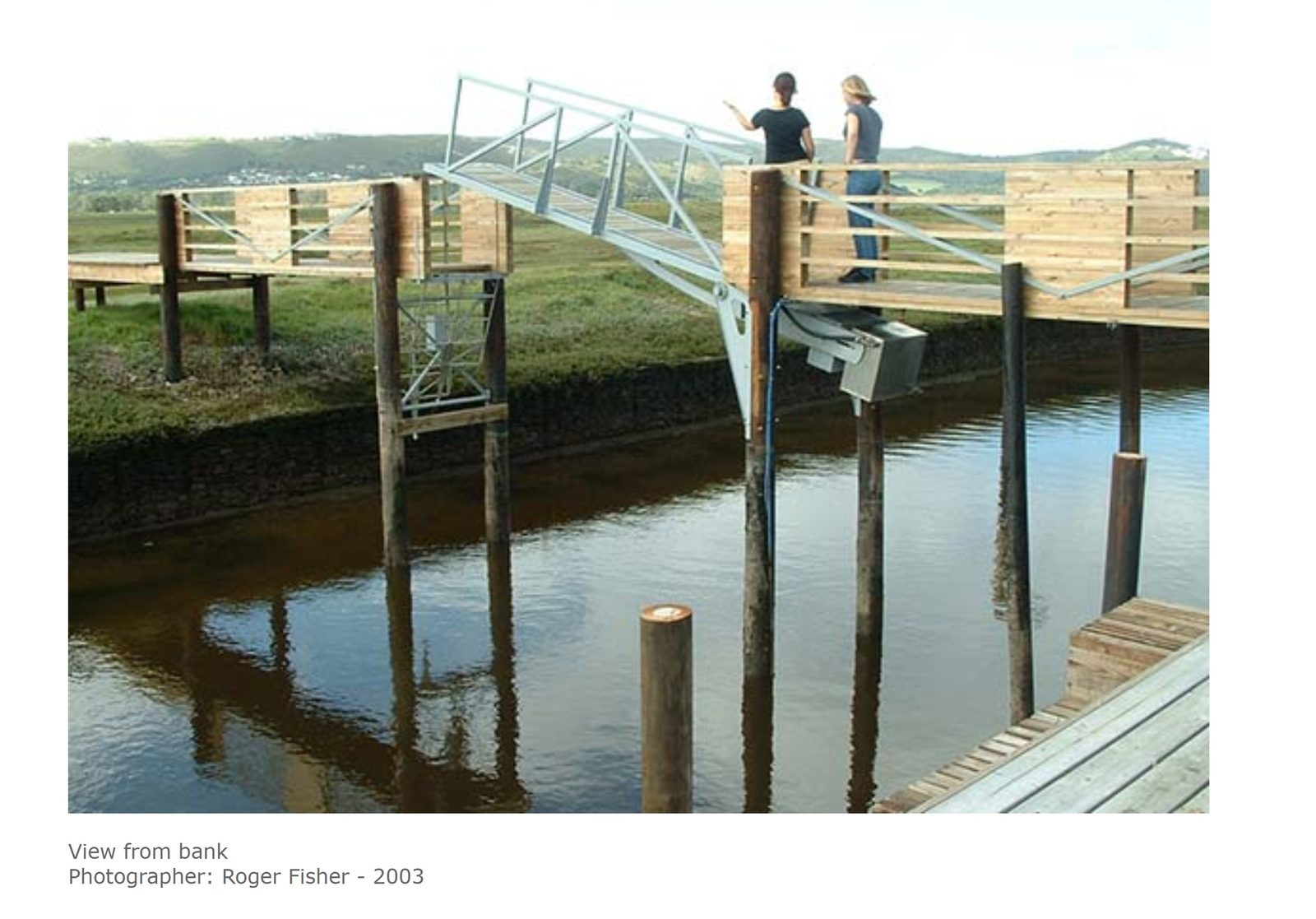
The bridge at Thesen Island lifts without a motor. There is no electrical mechanism, no hydraulic ram, no operator in a control booth. The lifting force is water — and the timing of the lowering is a slow drain.
A tap on the land side of the bridge opens. Water flows into a sealed container mounted on the bridge as its counterweight. As the container fills, its weight increases and the balance shifts — the bridge deck lifts on its pivot, clearing the waterway for boats to pass. The counterweight container has a small hole drilled through it. While the bridge is raised, this hole slowly drains the water. As the water drains, the balance tips back toward the bridge side and the deck descends, returning to the closed position under its own weight.
The sequence is automatic once initiated: open the tap, walk away. The bridge rises, holds while the vessel passes, and closes itself. No power required. No moving parts beyond the pivot and the tap. The mechanism is gravity, water, and a calibrated hole.
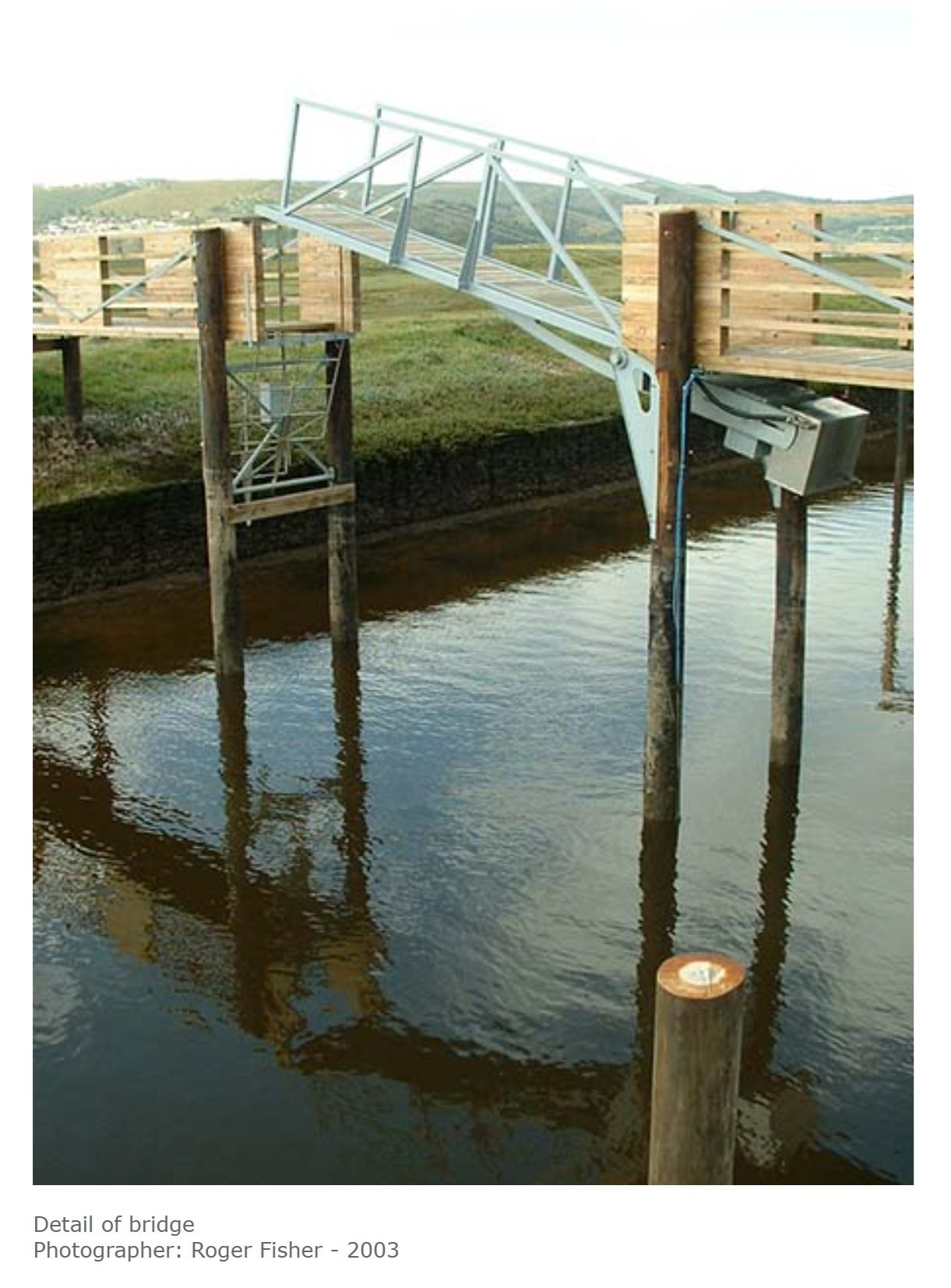
The design belongs to a tradition of counterweighted bascule bridges — the same principle that operates drawbridges across medieval Europe and industrial canal systems worldwide. What distinguishes the Thesen Island bridge is the use of water as both the motive force and the timer: filling provides the lift, draining provides the return. The mechanism requires no operator to close the bridge — it closes itself on a fixed schedule determined by the rate at which the hole empties the counterweight container. Calibrate the hole, calibrate the timing.
This is the same thinking that governs the counterweighted sun chimney at the Skaapwagtershuisie — gravity doing the work, a mechanism designed to require no energy input beyond what is already available in the system.