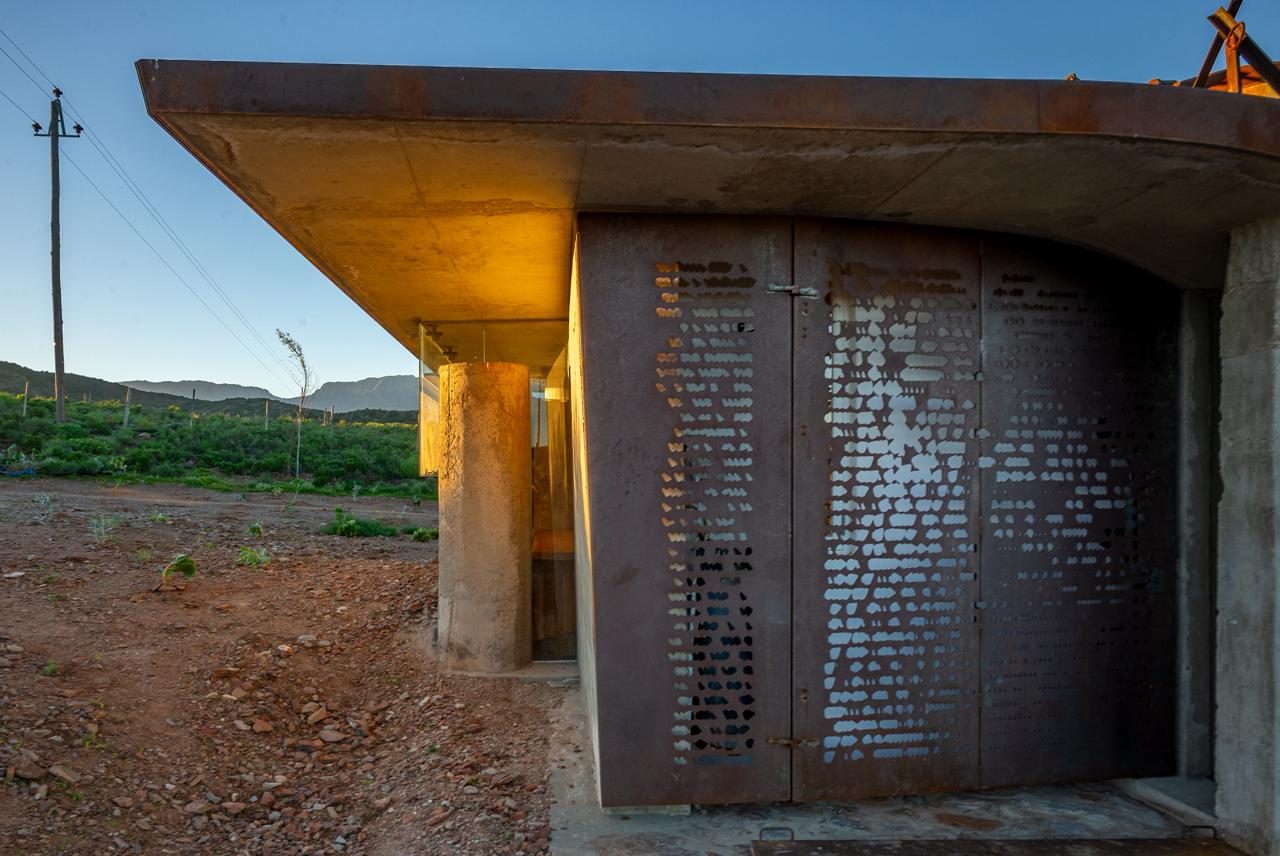
Design
Philosophy
Nature does not intend to be beautiful. It is focused on survival by accurate problem solving. It resolves both complexity and simplicity into a perfect adaptation between organism and habitat.
The built world is a manmade inclusion in a global natural ecosystem. During the design process, symbiotic and specifically mutualistic relationships between the built world and the natural global ecosystem should be formed. There are clues in the sciences — chemistry, physics, biology.
A good building should be in harmony with its habitat — as a whale is with the ocean, an albatross with a long flight, or a cheetah with the Savannah. The purpose of adaptation is survival, not beauty; that beauty follows anyway is the strange and unavoidable result.
To be self-sustainable and self-sufficient is the real challenge, and it begins with a shift in how the problem is understood. Working with materials to their optimum ability is part of this objective — to enclose space with the least amount of material, by understanding structure and the full process of design, manufacture, and assembly.
So what is a building? It is a contained space created by humans — a space to protect, store, and support human activity. In its most reduced form it is a constructed microclimate: a space where the climate inside is more comfortable than outside. In a harsh climate the absence of a shelter may mean death.
The act of architecture should not be reduced to only art or a stylistic packaging exercise.
"Buildings, too, are children of earth and sun."
— Frank Lloyd Wright